If you’re curious about Thai massage but unsure what actually happens, here’s the short answer: Thai massage is a fully clothed, mat-based treatment that combines rhythmic compression with assisted stretching and gentle joint movement. There’s no massage oil. Your therapist may use their hands, forearms, knees and feet to apply pressure and guide you through comfortable stretches while you change positions on a padded floor mat.
It’s more active than a typical table massage, but the movement should still feel controlled and suited to you.
What happens during a Thai massage?
When you arrive, your registered massage therapist (RMT) will ask about your goals, comfort level and any health concerns. Wear loose, stretchy clothing that lets you move easily; you’ll stay dressed throughout the session.
You’ll lie on your back, side or stomach, or sit up for some parts of the treatment. Your RMT may apply steady, rhythmic pressure through your clothing, then guide an arm, leg or your torso into a gentle stretch. These assisted movements are sometimes compared to yoga, but you don’t need yoga experience or flexibility. Your therapist does the guiding.
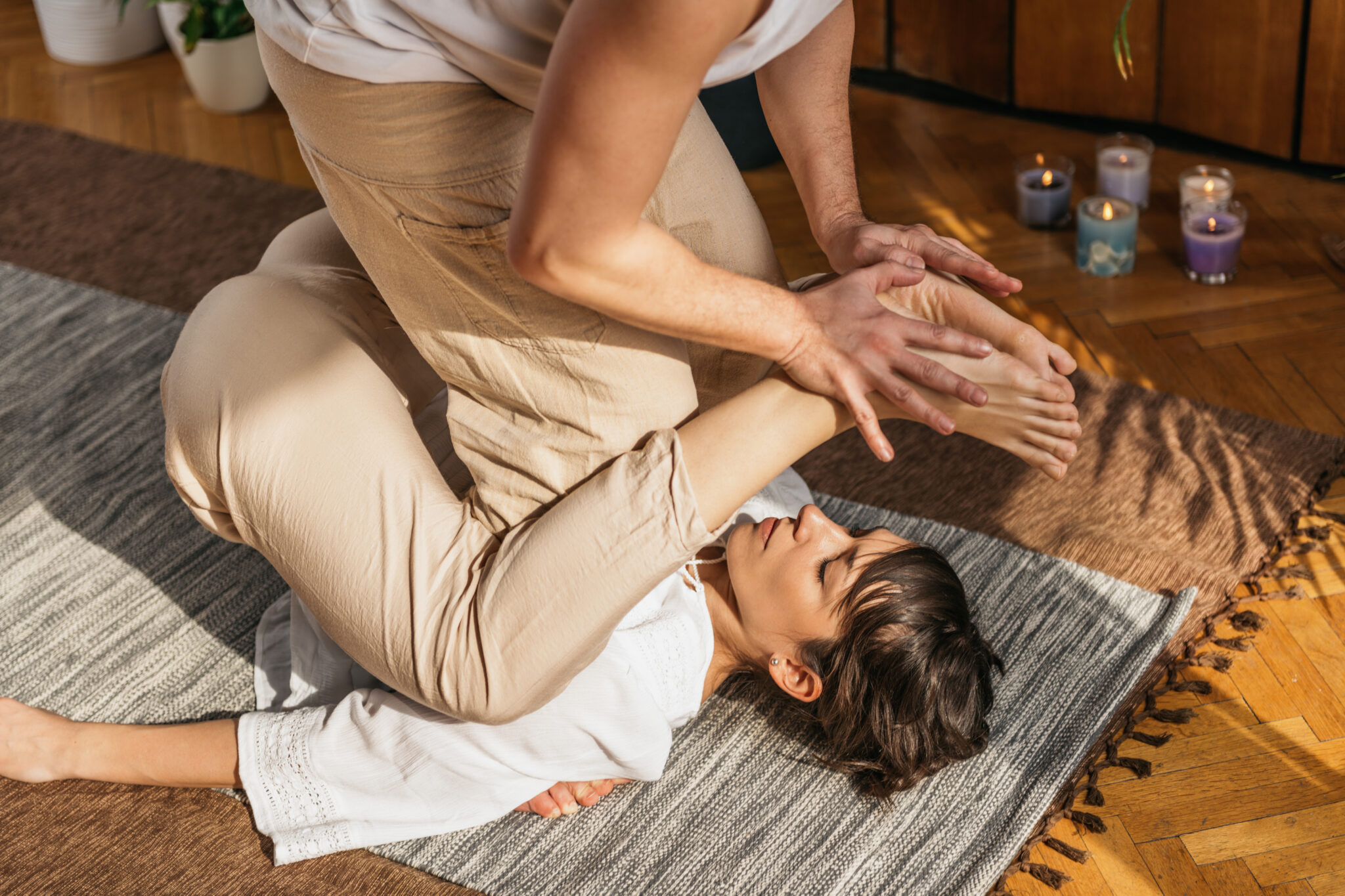
The pressure can feel firm, and a stretch may create a mild pulling sensation. It shouldn’t feel sharp, forced or painful. Speak up if you want less pressure, a smaller range of motion, a different position or a pause. You’re an active partner in the session, even when you’re relaxing into the mat.
How is it different from Swedish or deep tissue massage?
The main differences are where you’re treated, what you wear and how much you move.
- Thai massage: You stay fully clothed on a floor mat, without oil. Your RMT combines rhythmic compression with assisted stretches and gentle joint movement. You may change positions during the session.
- Swedish massage: You’re usually on a massage table, with your skin exposed only in the area being worked and covered by a sheet or towel. Oil or lotion is commonly used, and the therapist uses flowing strokes and kneading. You generally stay still.
- Deep tissue massage: This is also typically performed on a table with oil or lotion and draping. Your therapist uses slower, more focused pressure on selected areas. Like Swedish massage, it usually involves less guided movement than Thai massage.
No style is automatically better. If you prefer a quiet session where you lie still, a table massage may suit you more. If you’re comfortable moving through supported stretches, Thai massage may be worth exploring. You can compare options on our massage therapy services page.
Who might enjoy Thai massage?
If you sit at a desk for long stretches, you may recognize the feeling of being stiff and compressed by the end of the day. Thai massage’s combination of pressure and guided movement may appeal to you if you want to explore a more active session.
It may also interest you if you’re a runner or cyclist using Edmonton’s river valley trails in summer, a hockey player balancing drop-in games, or a gym-goer looking for mobility work alongside your usual recovery routine. And if lying still on a table doesn’t sound relaxing to you, the change in position may feel more natural.
Edmonton’s seasons add their own context. Long winter commutes, snow-shovelling and dry cold can leave you feeling less mobile; when warmer weather brings you back to outdoor activity, you may notice that stiffness more. Thai massage isn’t a substitute for exercise, rest or appropriate care, but it offers a different way to experience hands-on work and gentle movement.
Research is worth keeping in perspective. A 2020 review of sports massage, not Thai massage specifically, analysed 29 studies involving 1,012 participants and found small benefits for flexibility and muscle soreness, but no clear improvement in measures such as strength or endurance. That’s useful context, not a promise of what you’ll experience. You can read the review in BMJ Open Sport & Exercise Medicine.

Is Thai massage right for everyone?
Not necessarily. Assisted stretching and pressure may not feel comfortable or appropriate for every body or situation. Your RMT can adapt pressure and range of motion, and may avoid particular movements based on your health history. You can also ask for a gentler approach or choose another massage style.
If you have a recent injury, osteoporosis or a joint condition, check with a healthcare provider before booking. The same goes if you’re pregnant: ask your provider whether massage is appropriate for you and tell the clinic when you book, so your needs can be discussed. For more guidance on massage safety and when to check with a clinician, see Cleveland Clinic’s overview of massage therapy.
Before your session, tell your RMT about pain, injuries, surgeries, medical conditions or movements you’d rather avoid. During the session, let them know if a stretch feels too strong. You don’t have to push through discomfort.
Your first Thai massage in Edmonton
If you’re trying Thai massage for the first time, arrive in clothes you can stretch in and share what you hope to get from the appointment. Your RMT can explain each movement and check in as the session progresses. If you’re comparing options, you can also explore Thai massage at Massage Quest or read our guide to hockey-season recovery in Edmonton.
At Massage Quest, registered massage therapists offer personalized care in a cozy clinic with soothing music. You’ll find us at 116 Edgemont Road NW. Direct insurance billing is available, and same-day appointments may be available depending on the schedule. If you’re looking for massage therapy Edmonton residents can fit around their routines, you can check availability and book online.