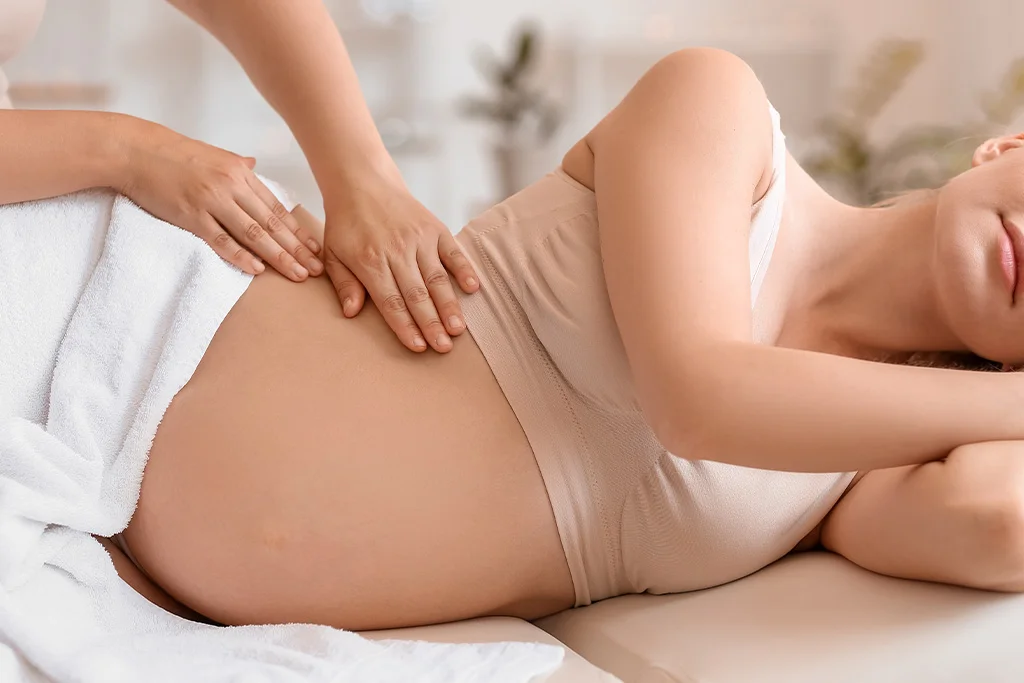
If you’re in your second or third trimester, you may feel your changing body in your lower back, hips, legs, and even when you’re trying to sleep. A long commute or hours at a desk can add to the stiffness. As Edmonton’s icy sidewalks arrive, you may also find yourself moving more cautiously and bracing your hips to stay steady.
Prenatal massage can offer a calm, comfortable pause and may help ease some muscular tension. It isn’t a substitute for prenatal care, and it won’t resolve every source of discomfort. The right session starts with your health history, your care provider’s guidance and positioning that feels safe for you.
Why your back and hips may feel different
As your pregnancy progresses, your body adapts to carrying more weight and supporting a changing centre of balance. Your posture and the way you move may shift, while everyday tasks (sitting through a meeting, driving across Edmonton or turning over in bed) can make your back and hips feel sore or tight.
If you notice discomfort that travels from your lower back or buttock down your leg, it may feel sciatica-like. That description doesn’t tell you the cause, so mention it to your doctor or midwife, especially if it’s new, worsening or accompanied by numbness or weakness. A massage therapist can adapt a session for comfort, but massage does not diagnose or treat the cause of nerve-related symptoms.
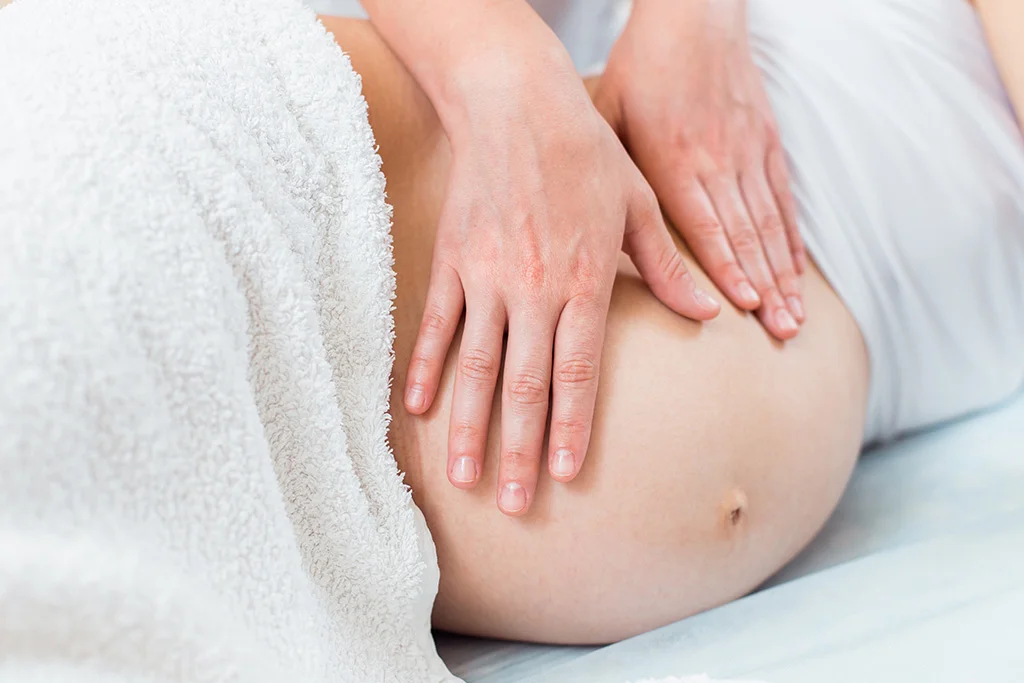
You may also feel a pulling sensation around your lower abdomen or groin, sometimes described as round ligament tension. Let your RMT know where you feel it. They can avoid direct pressure on the abdomen and focus, if appropriate, on comfortable positions and surrounding areas instead.
What prenatal massage may offer
A prenatal massage is adapted to your changing comfort and needs. Gentle, comfortable work around the back, hips, shoulders or legs may help you relax and feel less tense for a time. For some people, a quiet session also offers a welcome chance to slow down when sleep has been interrupted or settling in at night feels difficult.
Research is encouraging but not conclusive. A systematic review and meta-analysis looked at 10 studies involving 1,198 pregnant women and found that manual therapies, including massage, were associated with less back and pelvic pain compared with usual care or relaxation, but not compared with sham treatment. The authors noted that more high-quality research is needed. That’s a useful reminder: massage may support comfort, but results vary, and it isn’t a guaranteed or lasting fix. (Review of manual therapies for pregnancy-related back and pelvic pain)
A careful note about swollen ankles
Mild swelling can happen during pregnancy, but massage should not be used to explain away a change that concerns you or to promise that swelling will go down. Tell your doctor or midwife about swelling, and get prompt medical advice for sudden or significant swelling, particularly in your face or hands, or swelling with a severe headache or vision changes. If one leg becomes swollen, painful, warm or red, don’t massage it; seek urgent medical advice.
How your RMT adapts positioning and pressure
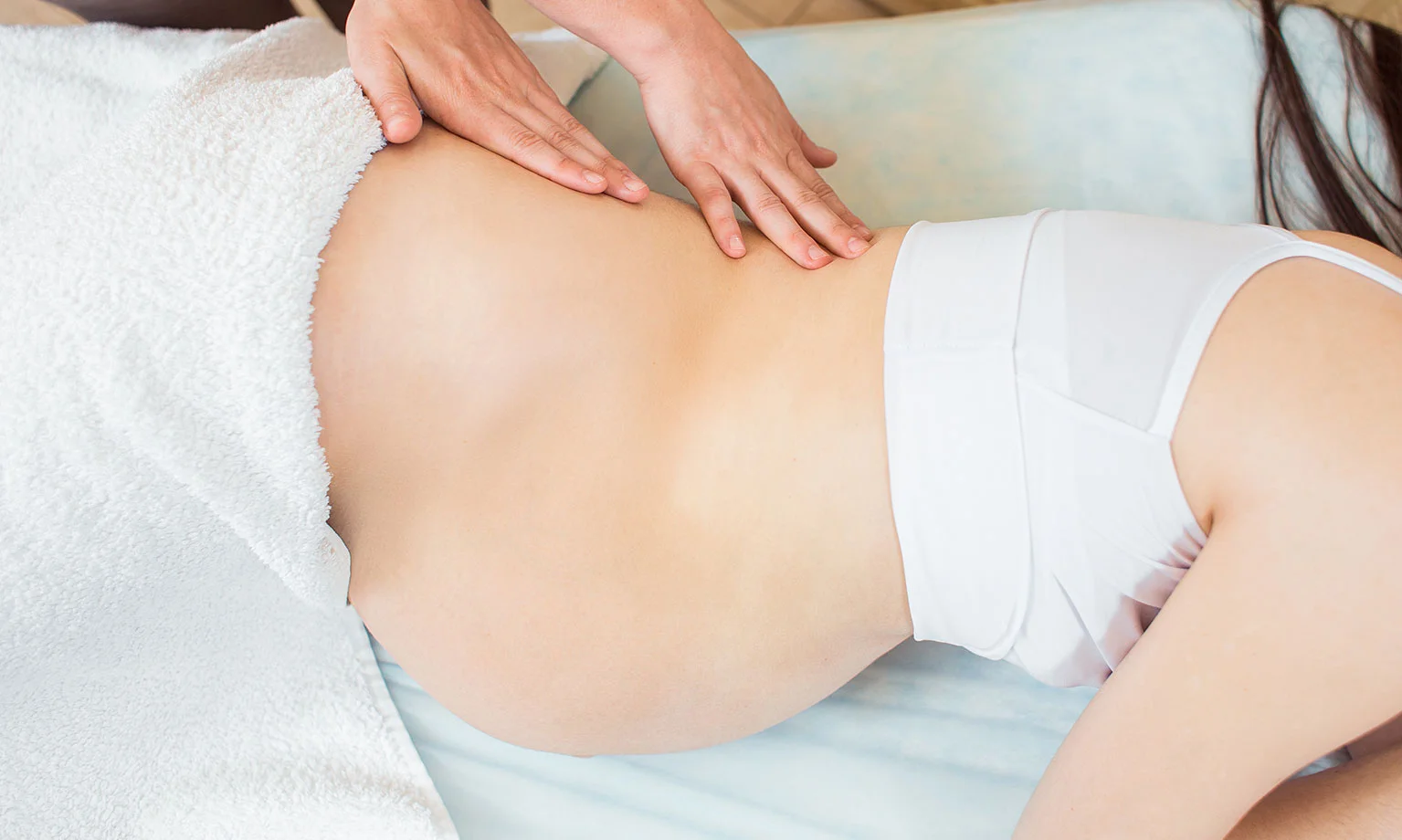
When you’re further along, lying on your stomach may not be comfortable, and spending a long time flat on your back may not suit you either. A trained RMT can help you settle on your side with cushions or bolsters supporting your belly, hips and legs. Your position can be adjusted during the appointment. Comfort matters more than staying still.
Your therapist should ask about your trimester, health history, symptoms and preferences before starting. At Massage Quest, our RMTs personalize pressure and positioning for each trimester. They avoid pressure that feels uncomfortable, adapt techniques around pregnancy-related considerations and check in with you as the session continues. You can ask for a change or pause at any time.
The American College of Obstetricians and Gynecologists notes that massage may be a way to relax during pregnancy and recommends discussing it with your healthcare professional. Check with your doctor or midwife before booking, especially during the first trimester or if you have a high-risk pregnancy, pregnancy complications or specific restrictions. If you’re unsure, ask before scheduling.
A few practical steps before your appointment
When you book a prenatal massage, a little preparation helps your RMT plan around what you’re experiencing:
- Share your trimester and any health guidance. Mention medical restrictions, recent changes in symptoms and any advice from your doctor or midwife.
- Describe what feels uncomfortable. Tell your therapist whether you’re dealing with back or hip tension, leg discomfort, sleep trouble or a pulling sensation, and what makes it better or worse.
- Ask for the position you need. Side-lying with cushions is a common option later in pregnancy. Speak up if you need more support or want to change sides.
- Choose comfortable pressure. You don’t need to tolerate deep pressure for the session to feel worthwhile. Let your RMT know what feels soothing and what doesn’t.
- Pause if something feels wrong. Dizziness, breathlessness, pain or new symptoms are reasons to stop and reassess, not push through.
Prenatal massage is one of the therapeutic treatments offered at Massage Quest. If you’re looking for massage therapy Edmonton families can access close to home, our clinic is at 116 Edgemont Road NW. It’s a convenient stop for families in the area, whether you’re coming from a nearby appointment or fitting in a moment of care between daily plans.
Finding a massage therapist in Edmonton you feel comfortable with
If you’re comparing options for a massage therapist in Edmonton, look for an RMT who listens, asks about your pregnancy and adapts the session rather than relying on a standard routine. At Massage Quest, you’ll find compassionate care, a cozy setting with soothing music and a conversation about your comfort before treatment begins.
You can also explore our related guide to sciatica-like discomfort and massage in Edmonton for more context on back and leg symptoms. Massage can complement your prenatal care; your doctor or midwife remains the right person to assess new or concerning symptoms.
If you’ve received the go-ahead and would like a chance to unwind, you can book your prenatal massage online. Same-day appointments may be available, booking is easy, and direct insurance billing is offered for eligible plans, check with your provider about your coverage. When you arrive, your RMT will personalize positioning and pressure around your needs, one comfortable step at a time.