If your feet feel worn out after a shift, a long walk, or another day in winter boots, you may be curious about reflexology, but unsure what actually happens during a session. Is it a gentle foot rub? Does it tickle? And what does it mean when people say the feet “map” to the rest of the body?
Here’s a clear first-timer’s guide. Reflexology offers focused attention for your feet and a quiet chance to unwind. It can be a complementary wellness experience, but it isn’t a medical treatment or a cure.
What is reflexology?
Reflexology is a hands-on practice in which a practitioner applies pressure to specific areas of the feet. Some reflexology traditions use a foot map: they associate particular points or zones with organs and other parts of the body. That mapping is the idea behind the treatment, not a scientifically established way to diagnose or affect those body parts.
You may find reflexology relaxing, or simply appreciate having tired feet attended to with care. The proposed links between foot points and other parts of the body have not been proven, so reflexology should not replace medical assessment or treatment. For a balanced overview of the practice and the limits of the research, see Cleveland Clinic’s guide to reflexology.
What does a session feel like?
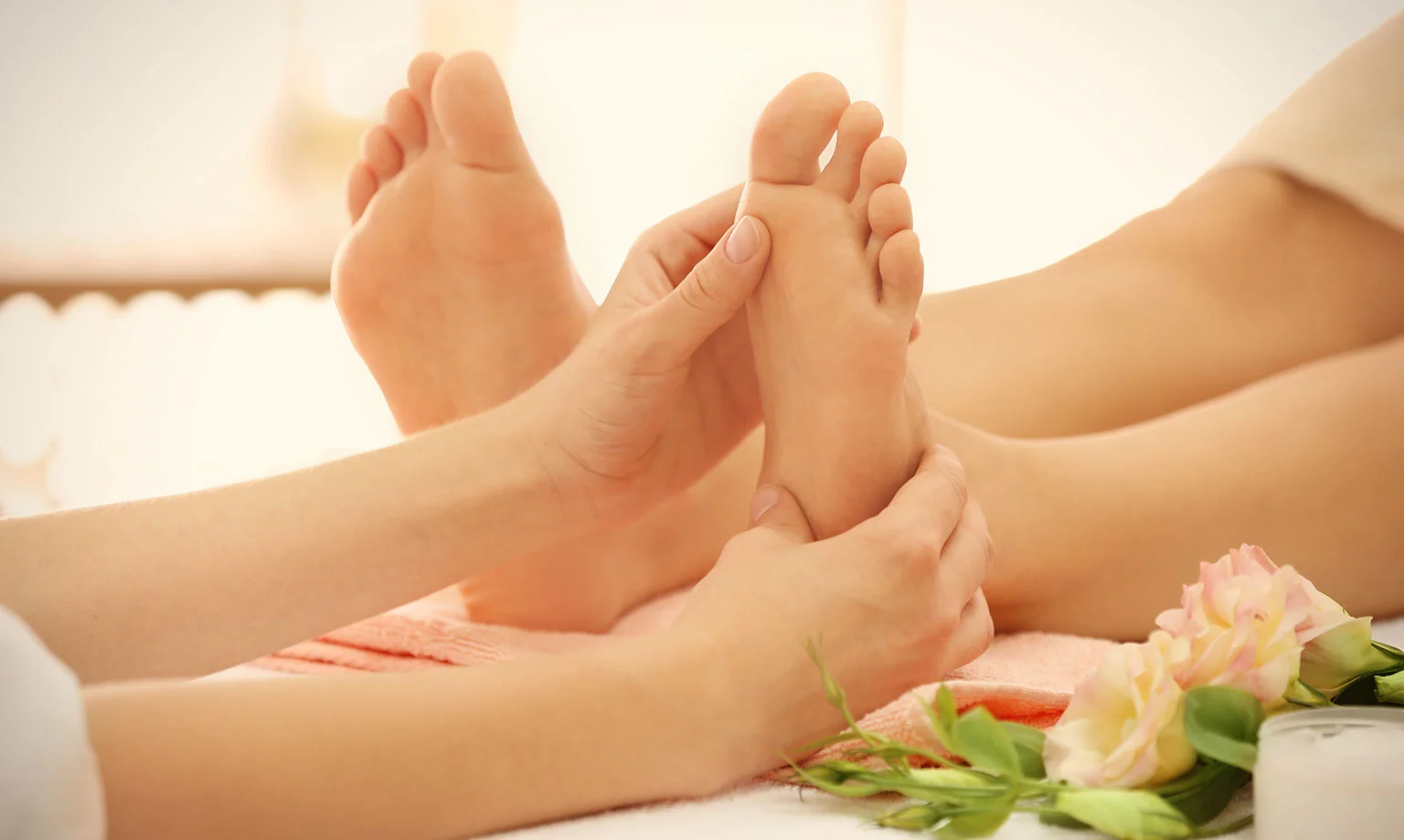
If you’re picturing a tickle session, that’s not usually what reflexology feels like. Your registered massage therapist (RMT) uses focused thumb and finger pressure across areas of your feet. The pressure may feel firm or sensitive in places, but it shouldn’t feel sharp or unbearable. You can ask for lighter pressure or a pause at any point.
You stay clothed. You’ll remove your shoes and socks so the therapist can work on your feet, but you don’t need to undress for a full-body massage. Your RMT will first ask about your goals, comfort, and health considerations, then tailor the session to you. Some sessions may include lotion or gentle movements as well as pressure.
Cleveland Clinic reports that a typical reflexology appointment is about 50 minutes, though session length varies. At Massage Quest, your RMT can explain what to expect before you begin, so you can settle in without guessing.

Who might enjoy trying reflexology?
Reflexology may suit you if you want focused foot care, a calming appointment, or an option that feels less exposing than a full-body massage. You might consider it if you:
- Spend long shifts standing or walking in retail, construction, healthcare, or another active job.
- Notice your feet feel tired after commuting or being on your feet all day.
- Wear heavy winter boots through Edmonton’s cold season and want a chance to let your feet rest.
- Prefer a focused session over the broader touch involved in full-body massage.
- Want a quiet, restorative break as part of your wellness routine.
If you have persistent or worsening foot pain, it’s worth discussing the cause with a healthcare provider rather than relying on reflexology alone. Reflexology can be a complementary experience, not a substitute for an assessment.
What the evidence can, and can’t, tell you
It’s understandable to hope that pressure on your feet will help with tension elsewhere. But the evidence doesn’t confirm that foot maps have a specific effect on corresponding organs or body regions. Cleveland Clinic notes that well-designed research hasn’t shown reflexology to be better than an ordinary foot massage.
That doesn’t mean you can’t enjoy the session. You may find the focused touch calming, and the time set aside to pause can feel restorative. It simply helps to keep expectations realistic: reflexology is best understood as a complementary wellness service, not a cure or a way to diagnose health concerns.
If you’re comparing hands-on options, you can explore Massage Quest’s massage services and learn how a gentler Swedish massage differs from other massage approaches.

A short safety note before you book
Check with your healthcare provider before trying reflexology if you’re pregnant, diabetic (especially if you have neuropathy) or dealing with a foot injury or circulation condition. Reduced sensation can make it harder to notice when pressure is too strong, and an injury or circulation concern may need professional guidance first.
Tell your RMT about relevant health conditions, changes in sensation, discomfort, skin concerns, or anything that affects your feet. If you have an open wound, infection, or significant unexplained pain or swelling, get medical advice before booking.
Trying reflexology in Edmonton
If you’re looking for reflexology Edmonton residents can book with a registered massage therapist, Massage Quest offers personalized sessions in a cozy clinic with soothing music. Your RMT will check in with you and adjust the pressure to your comfort. You can also ask about direct insurance billing and same-day appointments when booking.
The clinic is at 116 Edgemont Road NW, Edmonton. If your feet could use some focused care, book online to see available appointments. You can also call 780-800-2937 with a question before you decide.