If you've ever walked out of a massage feeling worse than when you walked in: or just… the same: you know that not all massage therapists are created equal. Finding the right one in Edmonton can feel like a guessing game, especially when every clinic claims to have "the best" practitioners.
Here's the thing. A great massage therapist doesn't just rub your shoulders for an hour. They assess, listen, adapt, and deliver results you can actually feel in the days that follow. The wrong one? They might aggravate an injury, ignore your concerns, or leave you wondering why you bothered.
Whether you're dealing with chronic tension from desk work, recovering from a sports injury, or simply craving some genuine relaxation after Edmonton's long winters, choosing the right therapist matters more than you might think.
Let's break down the seven essential qualities that separate exceptional massage therapists from mediocre ones: so you can make an informed choice and stop wasting time (and money) on sessions that don't deliver.
1. Recognized Certification and Credentials
This one isn't negotiable. In Alberta, massage therapy isn't a regulated health profession the same way it is in provinces like Ontario or British Columbia. That means technically, anyone can call themselves a massage therapist.
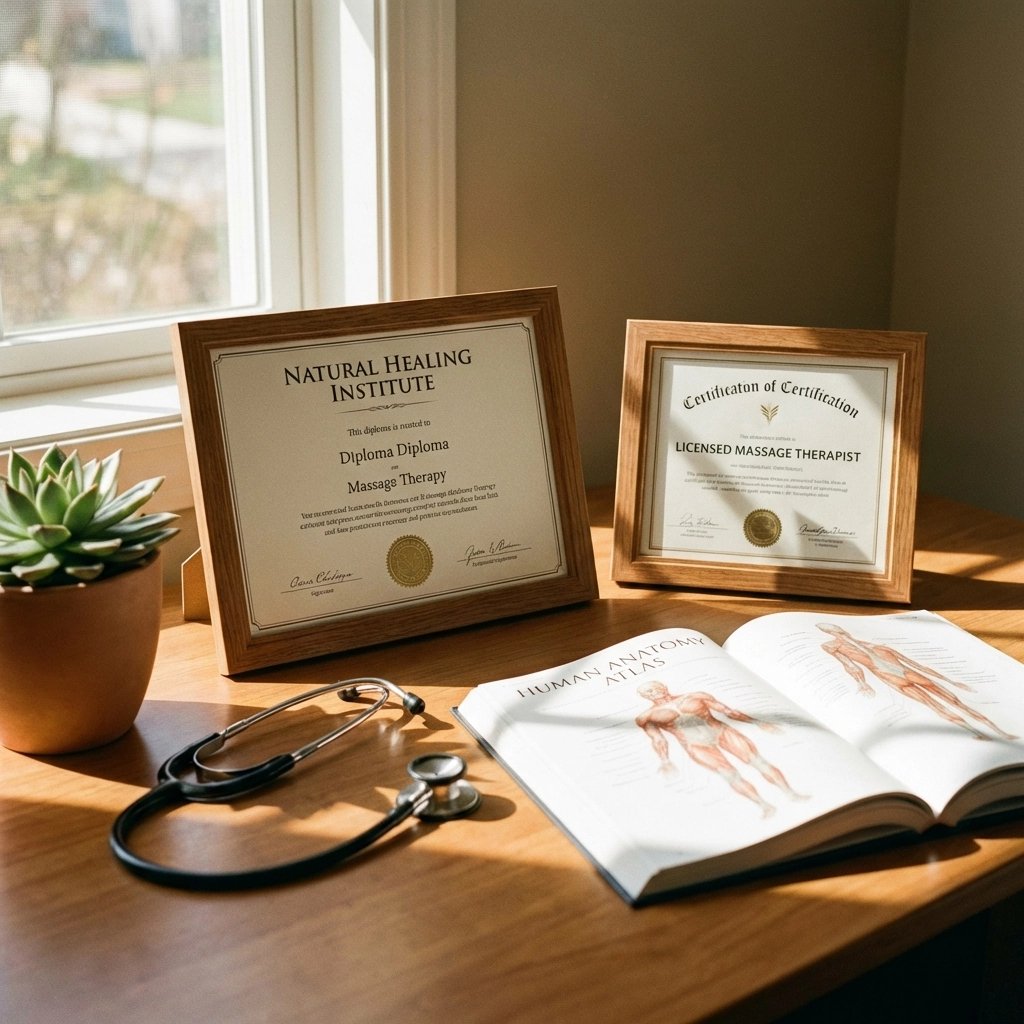
What most people miss is that legitimate therapists voluntarily pursue rigorous training and registration. Look for someone who has completed a 2,200-hour diploma program from a recognized institution and holds membership with a professional association like the Massage Therapists' Association of Alberta (MTAA), the Natural Health Practitioners of Canada (NHPC), or the Reflexology Association of Canada (RAC) – Alberta.
Why does this matter to you? These credentials indicate the therapist has studied anatomy, physiology, pathology, and ethics: not just watched a few YouTube tutorials. If you're using insurance benefits, most providers require treatment from a registered massage therapist (RMT) anyway.
When you're researching therapists, don't be shy about asking for their credentials. A confident professional will be happy to share them.
2. Comprehensive Anatomy Knowledge
A massage therapist who truly understands human anatomy can identify the source of your discomfort: not just the spot that hurts. That nagging pain between your shoulder blades? It might actually originate from tight muscles in your chest or neck.
Therapists with strong anatomical knowledge can trace referred pain patterns, understand how different muscle groups interact, and apply techniques that address root causes rather than just symptoms.
This is especially important if you're dealing with specific issues like sciatica, rotator cuff problems, or postural imbalances from sitting at a desk all day. A therapist who knows their anatomy will ask the right questions and target their treatment accordingly.
3. Proven Experience and Track Record
Years of experience matter: but so does the type of experience. A therapist who has spent a decade working primarily with relaxation massage may not be the best fit if you need rehabilitation work after a car accident.
Look for therapists with experience relevant to your needs. If you're an athlete, someone with a background in sports massage therapy will understand the demands you put on your body. If you're pregnant, seek out a practitioner trained in prenatal massage.
Client reviews can be helpful here, but read them critically. Look for patterns: Do multiple people mention that the therapist helped with similar issues to yours? Are there comments about professionalism and results, not just a pleasant atmosphere?

4. Diverse Massage Techniques
The best massage therapists don't rely on a one-size-fits-all approach. They've trained in multiple modalities and can draw from various techniques depending on what your body needs that day.
For those dealing with muscle knots and chronic tension, deep tissue massage might be ideal. If you're looking for stress relief and improved circulation, Swedish massage could be the answer. Some conditions respond beautifully to complementary treatments like cupping therapy, reflexology, Thai massage, or hot stone massage.
A versatile therapist can assess your needs during intake and recommend the most effective approach: or combine techniques within a single session for optimal results.
5. Effective Communication Skills
Let's be honest. Even the most skilled therapist can't help you if they don't understand what you're experiencing. Communication goes both ways, but it starts with a therapist who asks good questions and actually listens to your answers.
Before your session, a quality therapist will want to know:
- What brought you in today
- Any injuries, surgeries, or medical conditions
- Areas to focus on: and areas to avoid
- Your pressure preferences
During the massage, they should check in periodically. "How's this pressure?" isn't just polite: it's essential for delivering effective treatment without causing unnecessary discomfort.
After your session, expect some guidance. A good therapist might suggest stretches, hydration tips, or recommend a follow-up timeline based on your condition.

6. Personalized Treatment Approach
When you book a massage, you're not just paying for 60 or 90 minutes of someone's time. You're paying for their expertise in addressing your specific situation.
A therapist who delivers the exact same routine to every client isn't providing personalized care: they're running an assembly line. The best practitioners adapt their approach based on your intake information, what they feel in your tissues, and how your body responds during treatment.
This personalization should be evident from your first appointment. The therapist should reference your health history, acknowledge your goals, and explain how they plan to address your concerns. If they dive straight into a generic routine without any discussion, that's a red flag.
At Massage Quest, our therapists develop individualized treatment plans because we know that what works for one person might not work for another.
7. Professional Environment and Hygiene
The physical environment plays a bigger role in your massage experience than you might expect. A clean, well-maintained space signals professionalism and respect for clients.
Look for:
- Fresh linens for every client (this should be non-negotiable)
- Clean treatment rooms with appropriate lighting and temperature
- Sanitized equipment and surfaces
- A calm atmosphere that supports relaxation
Beyond cleanliness, consider whether the therapist maintains professional boundaries. They should provide proper draping, respect your privacy, and create an environment where you feel safe and comfortable throughout your session.
It's also worth confirming that your therapist holds current First Aid and CPR certification. While emergencies are rare, knowing your practitioner can respond appropriately provides peace of mind.
Putting It All Together
Finding the right massage therapist in Edmonton doesn't have to be overwhelming. When you know what qualities to look for, you can ask the right questions and make a confident choice.
Here's a quick checklist for your search:
- ✓ Verified credentials and professional association membership
- ✓ Strong foundation in anatomy and physiology
- ✓ Experience relevant to your specific needs
- ✓ Training in multiple massage modalities
- ✓ Clear, open communication style
- ✓ Commitment to personalized treatment
- ✓ Clean, professional environment
Don't hesitate to contact potential therapists before booking. Ask about their qualifications, specializations, and approach to treatment. A therapist who welcomes your questions is likely someone who values the client relationship.
Ready to Experience the Difference?
If you're in Edmonton and looking for massage therapists who check all these boxes, we'd love to help. Our team at Massage Quest brings together registered practitioners trained in a wide range of techniques: from therapeutic and deep tissue work to relaxation-focused treatments.
Have questions about which service might be right for you? Send us a message or explore our full range of massage therapy services to learn more.
Your body deserves better than a guessing game.