If you’re training on Edmonton’s River Valley trails, adding hills near Terwillegar, walking around Hawrelak Park, or preparing for a fall race, outer-knee pain can interrupt your routine quickly. You may notice a sharp or burning feeling after several kilometres, tightness along the outside of your hip, or discomfort when climbing stairs.
The same pattern can affect cyclists, walkers, and anyone increasing activity after a quieter summer.
Here’s what you should know about IT band syndrome and where massage therapy Edmonton services may fit into a sensible recovery plan.
What is IT band syndrome?
IT band syndrome is an overuse-related irritation involving the iliotibial band, a strong strip of connective tissue running along the outside of your hip and thigh toward your knee. It commonly causes pain on the outside of the knee, and sometimes tightness or aching at the outer hip.
The iliotibial band helps stabilize your leg as you walk, run, and cycle. When you repeatedly bend and straighten your knee: especially while increasing mileage, adding hills, or training on sloped surfaces: the tissues around the outer knee can become sensitive.
If you’re feeling pain that gets worse as you continue exercising, your symptoms may be consistent with IT band syndrome. However, outer-knee pain can also come from other conditions, so a healthcare provider should assess persistent or worsening symptoms.
For a medically reviewed overview, see the Cleveland Clinic’s guide to iliotibial band syndrome.
Can massage therapy help IT band syndrome?
Massage therapy can help reduce tension in surrounding muscles and make movement more comfortable, but it works best as part of a broader plan that includes activity modification, strengthening, and a gradual return to exercise.
Massage does not “release” or permanently lengthen the IT band itself. Instead, a registered massage therapist may work with the muscles around your hip, glutes, thigh, hamstrings, and lower leg. The goal is to address areas that may be contributing to overall tension while avoiding excessive pressure directly over an irritated outer knee.
That distinction matters.
If you’re searching for a massage therapist in Edmonton after pain appears, choose care that respects the current sensitivity of the area rather than treating every tight spot with deep pressure. Your session should be adjusted to how your body responds.

Why outer knee pain often appears during Edmonton training
Whether you’re running the trails near Terwillegar, looping past the Frederick G. Todd lookout, or cycling through Edmonton’s connected pathways, repetitive loading is usually part of the picture.
Common contributors include:
- Increasing distance or speed too quickly
- Adding hills or downhill sections suddenly
- Returning to training after time away
- Running on consistently sloped or cambered surfaces
- Weakness or reduced endurance in the hip and glute muscles
- Worn-out or unsuitable footwear
- Limited recovery between sessions
- A bike setup that places extra stress on the hips or knees
If your outer knee flares after a long walk, stair climbing, or a weekend race, that does not automatically mean you need to stop all movement. Reducing the activity that provokes symptoms and choosing lower-impact options can help you stay active while the area settles.
That’s where a coordinated approach becomes useful.
How massage therapy may support your recovery
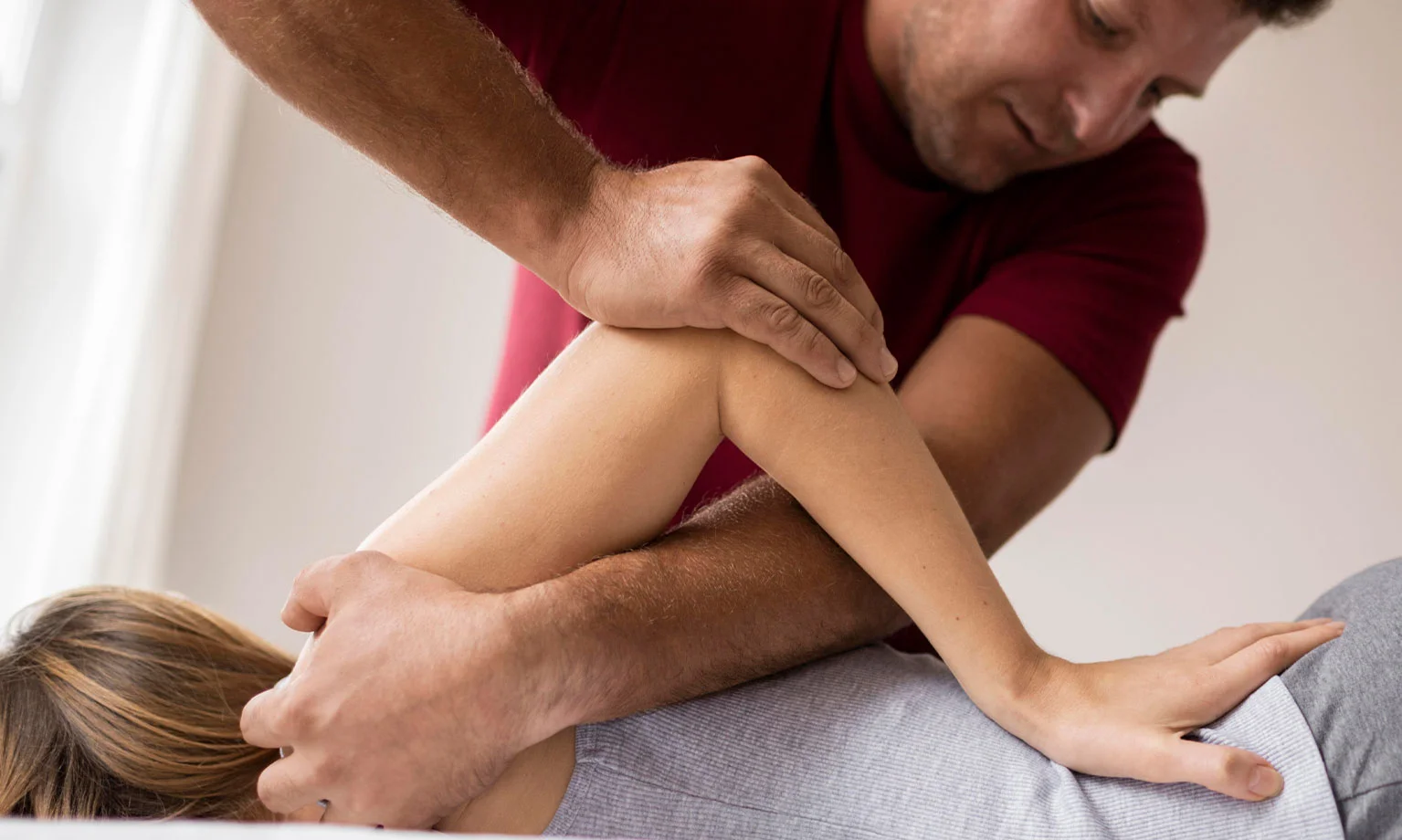
If you book sports massage therapy in Edmonton, your RMT can begin by asking about your training schedule, symptom location, recent changes, and movements that aggravate the area.
A personalized treatment may include gentle or moderate work around:
- The gluteal muscles
- The tensor fasciae latae, a small muscle near the front and side of the hip
- The quadriceps and hamstrings
- The hip flexors
- The calves and lower leg
- The lower back and pelvis, when relevant to your movement pattern
If you’re dealing with a flare, your therapist may avoid aggressive pressure over the most painful point at the outer knee. A comfortable session should not leave the area feeling more irritated afterward.
Massage may help you feel less guarded and more comfortable moving. That can make it easier to follow a strengthening program or return gradually to walking, running, or cycling. It should support your plan: not replace an assessment or rehabilitation exercise.
If you prefer firmer pressure for broader muscle tension, deep tissue massage therapy may be discussed, but “deeper” is not automatically better for an irritable tendon or sensitive knee.
What you can do between sessions
If you’re hoping to return to the River Valley or the Victoria Park oval, start with the basics:
Reduce the activity that triggers sharp pain.
If running hurts but easy cycling does not, or if hills are the problem, adjust the load rather than pushing through.Build hip and glute strength.
Side-lying leg lifts, bridges, controlled step-downs, and other exercises may be useful. A physiotherapist can help you choose the right exercises and progression.Return gradually.
When walking is comfortable, begin with shorter, flatter sessions. Increase one factor at a time: distance, speed, hills, or frequency.Avoid aggressive self-massage over the painful spot.
Gentle work on nearby muscles may feel helpful, but pressing hard on the outer knee can aggravate symptoms.Pay attention to your training surface and equipment.
If pain repeatedly appears on sloped paths, downhill sections, or after a change in shoes or bike setup, that pattern is worth addressing.

If you’re unsure whether the pain is coming from the IT band, knee joint, hip, or another structure, seek an assessment before increasing your training.
How long until IT band syndrome feels better?
Many people notice improvement over several weeks when they reduce aggravating activity and follow an appropriate strengthening and return-to-exercise plan. Cleveland Clinic reports that nonsurgical recovery commonly takes about four to eight weeks, although timelines vary.
If you’re continuing to provoke the pain, recovery may take longer. If your symptoms are mild and you respond quickly to activity changes, you may feel more comfortable sooner.
Massage can help manage muscle tension during that process, but it cannot provide a guaranteed recovery timeline. Your training load, strength, sleep, footwear, movement habits, and the actual cause of your pain all matter.
When should you get medical or physiotherapy advice?
If you have outer-knee or hip pain that does not improve after a few weeks of sensible self-care, arrange an assessment. You should also seek medical advice if you notice:
- Significant swelling, warmth, or redness
- Locking, giving way, or a feeling of instability
- Pain after a fall or direct injury
- Difficulty bearing weight
- Numbness, tingling, or weakness
- Pain that continues at rest or worsens steadily
Not every lateral knee problem is IT band syndrome. A proper assessment helps you avoid losing time on the wrong approach.
Massage therapy Edmonton support at Massage Quest
If you’re looking for personalized edmonton massage therapy after a training flare-up, Massage Quest provides care from registered massage therapists who are skilled, attentive, and passionate about helping clients move more comfortably.
You can expect:
- A treatment plan adjusted to your symptoms and activity
- Same-day appointments when availability allows
- Easy online booking
- Direct insurance billing
- A cozy setting with soothing music
- Clear communication about pressure and comfort
Massage Quest is located at 116 Edgemont Road NW, Edmonton. You can call 780-800-2937 or book during these hours:
- Monday–Friday: 9 AM–8 PM
- Saturday–Sunday: 10 AM–6 PM
If you’re preparing for a fall race, returning to the trails, or simply trying to walk without that familiar outer-knee flare, thoughtful support can help you take the next step with more confidence.